Our team will review everything you need to know to support a smooth recovery. You will receive clear, personalized instructions based on your specific procedure, and it is important to always follow the guidance provided by your surgeon.
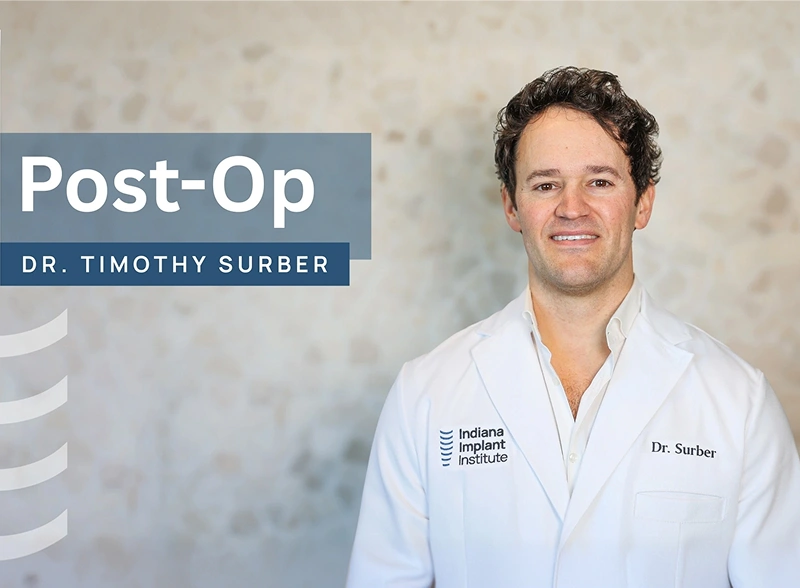
The video below shares general information about what to expect after surgery and how to care for yourself in the days that follow. If you have any questions or concerns at any point, our team is here to support you and guide you through your recovery.


Every patient and every procedure is unique. The information below outlines common experiences patients may have after dental implant surgery.
The instructions below are meant to help you feel prepared, but your surgeon’s instructions should always take priority. If anything feels unexpected or if you have questions during your recovery, please contact our office so we can provide guidance and reassurance.
After your surgery, you may begin to experience mild discomfort and swelling due to the surgical procedure. Over the next few days, you will experience soreness which may worsen for a few days. Please continue using the prescribed pain management medications and icing/heat methods. It is typical to experience the most swelling and bruising around the third to fourth day. Bruising and swelling all around the face and neck is normal. Get as much rest as possible and drink lots of fluids. Tenderness, bruising, and swelling are normal during the first one to two weeks.
Bleeding:
It is normal to experience some mild bleeding over the first few days. Small amounts of blood mixed with saliva make the mouth appear red or orange, do not worry about this minor oozing during the first several days.
Persistent Bleeding:
If the bleeding has not stopped or the color remains bright red after the first couple of days, please call us as we will need to see you to control the bleeding.
Swelling:
Swelling often accompanies surgery. To reduce swelling, use the ice wrap provided and apply it to the surgical area off and on for the first 24-48 hours. After the second day, ice will not be much help. At this time, you may switch to warm compresses to help reduce the swelling and soothe the area. The ice packs provided can be frozen AND microwaved. Please follow the instructions provided on the package.
Pain:
The days following surgery will most likely be accompanied by some discomfort. You will be prescribed pain medication to ease the discomfort. For best results, take the first pill before the surgical anesthetic wears off, beginning with the anti-inflammatory medication, such as Ibuprofen or Naproxen (unless advised otherwise by your doctor). You may use the prescribed narcotic pain medication as well for breakthrough pain.
Pain medicine may cause nausea. We recommend you take the pills with a small amount of food. Various levels of relief will be achieved according to the dosage of the medication and the individual taking the pain medication. If your pain does not reduce with the medication prescribed, please let us know.
Please call during weekday business hours for a refill if you anticipate needing more pain medication during the weekend.
Medications:
Nausea:
It is not uncommon to experience nausea after surgery. It should pass within a short period of time. If the nausea does not get better in a few days, please call our office.
Brushing/Hygiene:
Brushing is not typically required with your new teeth right after surgery. You will be instructed when and how to brush your prosthetic by our team. Rinsing is the most important aspect of hygiene. DO NOT USE A WATERPIK OR ELECTRIC TOOTHBRUSH (Sonicare) until approved by your Dentist. They will instruct you how to use them when it is time. We recommend using a non-abrasive toothpaste such as Sensodyne to avoid breakdown of the highly polished teeth. Try to stay away from the gum tissue. Remember to brush your tongue.
Activity:
Limit strenuous and physical activity for the first few days after surgery, up to one week. You may return to normal daily activities as tolerated after your procedure. Time may vary from patient to patient. We recommend having patience in your recovery.
Diet:
After surgery, you must stay on a STRICT full-liquid/non-chewing diet. When the doctors allow you to start a soft diet, please refer to the soft food dietary restrictions to make sure you do not harm your implants or your temporary teeth. Do NOT eat foods like chips, crackers, popcorn, etc. which may get stuck in the surgical healing site(s). The soft tissues will heal within about 4 weeks, however, the bone around the implants will require an additional 12 weeks, minimum to heal. Please be cautious with the temporary teeth as they can break if care is not taken.
Share your information below and our team will reach out to help schedule an appointment time that works best for you.
Terms of Use
Please be aware that this is not a secure email network under HIPAA guidelines. Do not submit any personal or private information unless you are authorized and have voluntarily consented to do so. We are not liable for any HIPAA violations. Understand that if you email us, you are agreeing to the use of an unsecured method and understand that all replies will be sent in the same fashion, which you are hereby authorizing.
By checking this box and submitting this form, you hereby agree to hold Indiana Implant Institute, including its doctors and affiliates, harmless from any hacking or any other unauthorized use of your personal information by outside parties.
By checking this box and submitting this form, you also agree to receive email and SMS communication from Indiana Implant Institute, including its doctors and affiliates. This may include appointment reminders, practice updates, review requests, and other information. Standard messaging rates may apply. You may reply STOP to any SMS message to opt out of SMS communications anytime.